Heads up: this post includes my affiliate link. If you sign up through it, I get a small kickback at no extra cost to you. I only recommend stuff I actually pay for and keep running.
I used to roll my eyes at VPN ads. You know the ones — some sponsored YouTube segment where the host makes hacking sound like a cartoon villain in a hoodie. For years I told myself I didn’t need one. I wasn’t doing anything shady. My phone had a passcode. My bank had two-factor. What else was there to worry about?
Then 2024 happened. And then 2025. And now we’re deep into 2026 and the news feels like it’s just a rolling list of breaches, leaks, and data being scraped to train something. At some point it stopped being paranoid and started being pretty normal to want a little privacy again. That’s how I ended up on NordVPN, and honestly, I don’t see myself switching any time soon.
Here’s the long version, with actual reasons.
The breach fatigue is real
It feels like every few months there’s another story. Health insurers, telecoms, ticketing companies, payroll providers. The AT&T leak alone exposed hundreds of millions of call records. Change Healthcare knocked out pharmacies across the country. Snowflake-connected breaches kept spilling customer data for months. And that’s before you count the stuff that didn’t make headlines.
A VPN doesn’t stop a company from getting hacked — nothing you do personally can fix that. But it does cut down on the surface area attackers have to play with. When you’re browsing through NordVPN, your ISP can’t sell your browsing history (which, yes, they legally can in the US), ad networks have a much harder time fingerprinting you, and sites you visit only see a Nord IP instead of yours.
The part that actually sold me is something called Threat Protection. It’s baked into the app and blocks known malware domains, trackers, and a surprising amount of ads before they ever load. I went from installing three browser extensions to just letting Nord handle it. There’s also a Dark Web Monitor that pings you if your email pops up in a new breach dump. Mine has gone off twice. Both times I changed passwords before I got the “your data was in a breach” email from the company itself.
Coffee shop Wi-Fi, airport Wi-Fi, hotel Wi-Fi
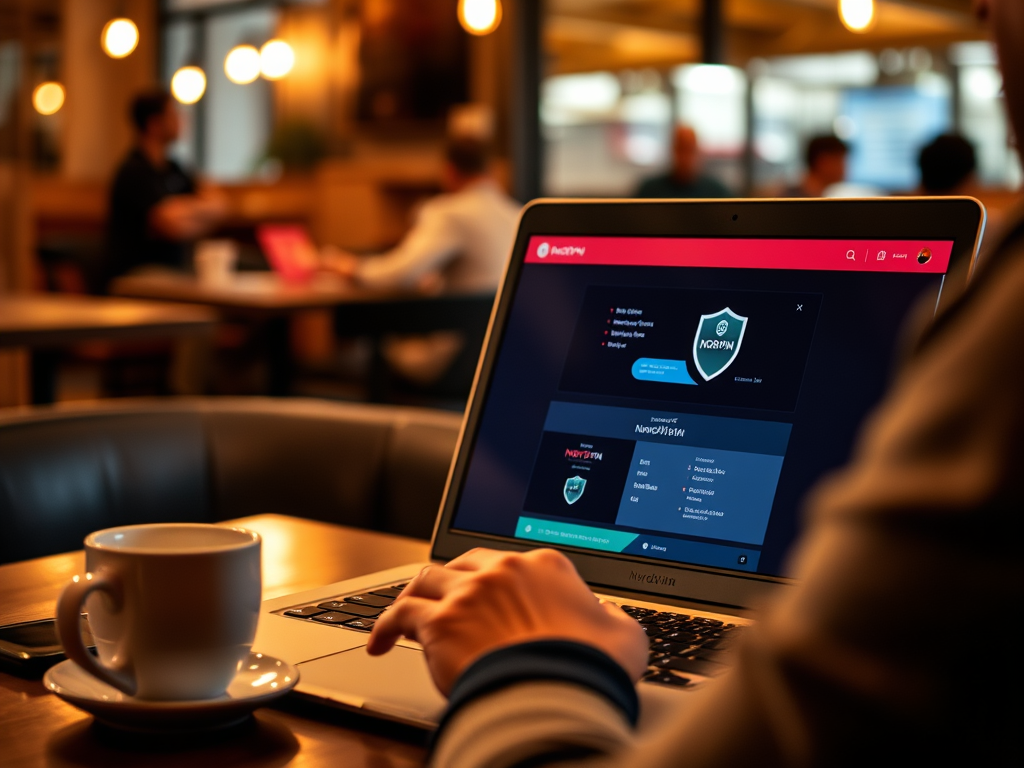
I do a chunk of my work from cafes. I also travel a decent amount. Every time I hop on one of those “FREE_AIRPORT_WIFI” networks, I’m basically trusting a router I’ve never met to handle my traffic politely. Most of the time it’s fine. But “most of the time” is a weird bar for anything involving your bank login.
This is the most boring, most obvious use case for a VPN, and it’s the one I use mine for the most. Flip the app on, pick a server, done. Nord’s app has a one-tap Quick Connect that grabs the fastest server for your location, and there’s a proper Kill Switch that cuts your internet entirely if the VPN drops — so you never accidentally leak traffic in the half-second before it reconnects.
For remote work specifically, the Meshnet feature has been weirdly useful. It lets you link your own devices together over an encrypted private network, so I can pull a file off my home desktop from a hotel in another country like it’s on the same Wi-Fi. No shady file-sharing tools, no weird cloud syncs. It’s free with the subscription, and it’s been a small life-changer for the “oh god I left that document on my other laptop” moments.
Travel and the great streaming shuffle
I’m not going to pretend this isn’t a reason people get a VPN. Streaming libraries are wildly different country to country, and it’s only gotten messier. If you travel with a Netflix or Max or Disney+ account, you’ve noticed your shows disappearing the moment you land somewhere. Live sports are even worse — local blackouts, regional exclusives, paywalls that change based on your IP. The Winter Olympics earlier this year were a great example, where coverage was spread across three or four different services depending on where you were watching from.
Nord has more than 7,000 servers across 118 countries at this point, which is frankly overkill, but it means there’s basically always a working option when one gets blocked. I’ve used it to catch soccer matches that weren’t airing in the US, finish a British show I started in London, and hit a better YouTube library from the road. Is that the main reason to buy a VPN? Probably not. Is it a nice perk? Yeah, a pretty big one.
The election-year stuff (and why I care more than I used to)
We’re in another election cycle and it’s a messy one. I’m not here to get political, but whatever side of anything you’re on, the amount of scraping, profiling, and targeted ad creepiness that goes on around elections has gotten to a level that’s genuinely uncomfortable. Add in the ongoing conversations about what governments can and can’t request from tech companies, and I just want a little less of my browsing tied to my real identity.
Nord is based in Panama, which means no mandatory data retention laws. Their no-logs policy has been independently audited multiple times at this point (most recently by Deloitte), which matters — a VPN that keeps logs is worse than no VPN, because you’re just handing your browsing to a different company. For people in countries where the press situation is rougher, they also offer Onion Over VPN (routes you through the Tor network automatically) and Double VPN (two encrypted hops instead of one). I don’t use those daily, but it’s nice knowing they’re there.
The stuff I didn’t expect to like
A few smaller things that have quietly made it feel worth the money:
Six devices on one account. My phone, laptop, work laptop, iPad, partner’s phone, and the Apple TV are all covered. One subscription.
NordLynx. This is their protocol based on WireGuard, and it’s genuinely fast. I lose maybe 5–10% of my speed when it’s on, which for a 500 Mbps connection is nothing I can feel.
Specialty servers. P2P-optimized, obfuscated (for countries where VPNs get blocked), dedicated IP if you want the same one every time. You probably won’t need most of these, but when you do, you really do.
The password manager and encrypted cloud. The higher-tier plans bundle in NordPass and NordLocker. I was already paying for a password manager separately, so rolling them together basically paid for the upgrade.
Is it perfect? No.
A fair review means saying what’s not great. The desktop app gets an update-heavy stretch every now and then where it wants to restart during something annoying. Pricing is cheapest on the two-year plan, which is a commitment if you’re just dipping a toe in — though the 30-day refund window gives you real room to test it. And occasionally a specific streaming service will catch on to a specific server, so you swap to another one. None of these have come close to making me want to cancel.
Who I’d actually recommend it to
If you travel. If you work from coffee shops or co-working spaces. If you’re tired of your ISP knowing everything. If you’ve ever gotten a “your info was in a breach” email and felt a little queasy. If you stream and you’re annoyed at geo-blocks. If you just want the baseline level of privacy that the internet used to have by default. That’s basically everyone I know at this point.
That’s about it. If you already have a VPN you like, great, keep using it. If you’ve been putting this off the way I did for years, this is the nudge. It takes ten minutes to set up, and then you stop thinking about it, which is kind of the whole point.